






Ski Buying Guide: Choosing the Right Ski
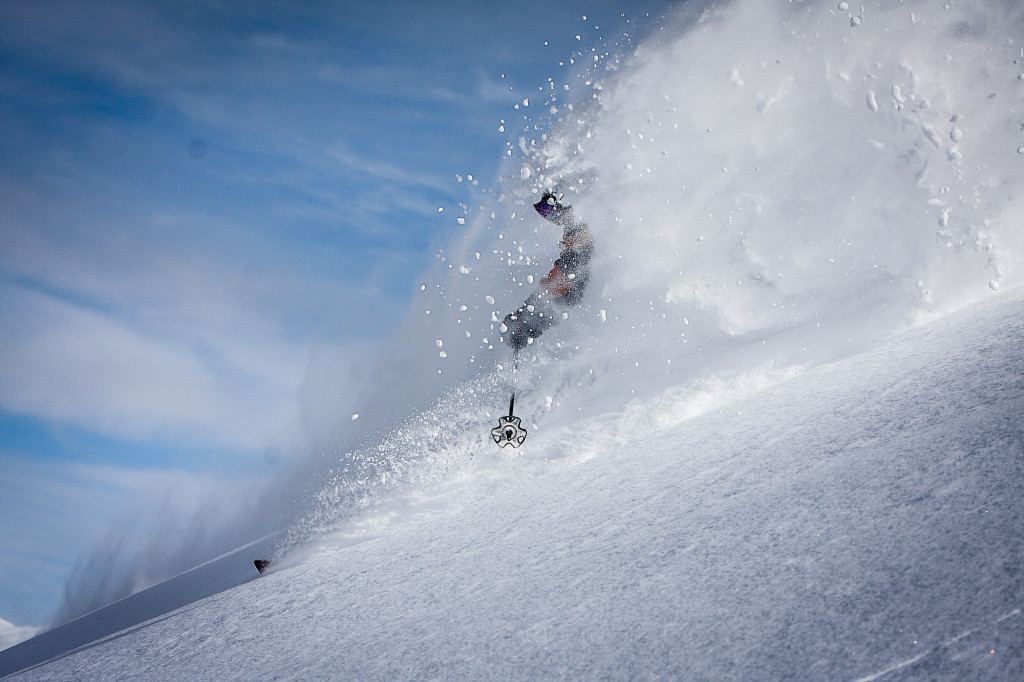
Photo – Willi Kunz
This ski buying guide covers everything you need to know about choosing the right skis. It’s tough to buy skis these days—there’s just too much choice. Skinny, fat, super fat, reverse camber, traditional camber, all-mountain skis, powder skis, carving skis, freestyle skis…it’s getting crazy. Plus, there are more ski fabricators than ever, from big companies to dozens of small independent makers cropping up worldwide. But choosing a ski begins not with who makes it, but with what ski length and ski width you need. Once you have that figured out, then you go shopping. This is true whether you want one or ten pairs in your quiver.
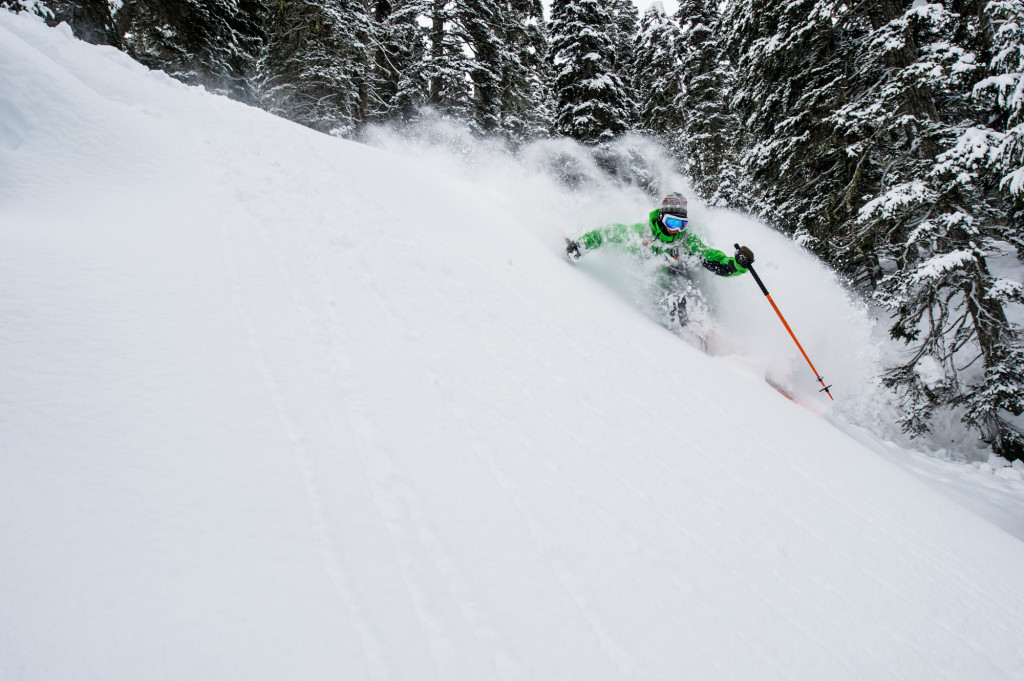
Photo – Reuben Krabbe
Understanding Ski Length
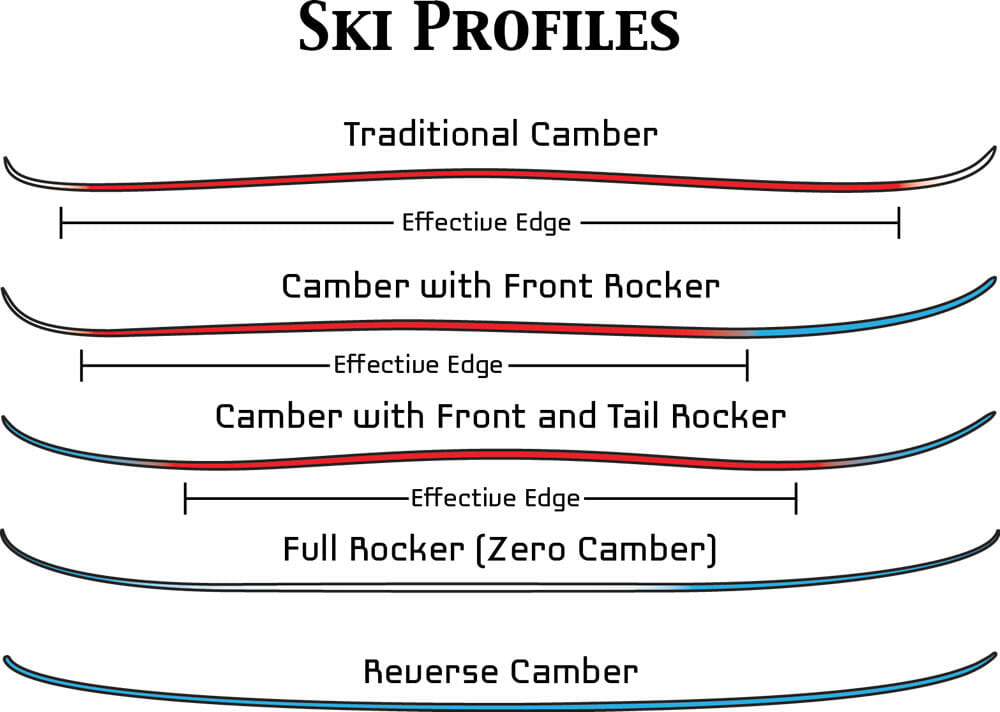
Skis come in a variety of shapes and sizes. In terms of ski length, the basic rule is that a longer ski requires more work to turn but provides better stability at speed. So a shorter ski will be snappier and easier to turn. At higher speeds, though, a shorter ski will be less stable than a longer one. But in our modern world, how long a ski feels is also affected by its shape. A traditional camber means it is slightly curved at both ends towards the snow. Think of a race ski, and you’ll know what I mean. A rockered or reverse camber ski is curved up at the tips and tail. Then there are variations between these (see below). So you might have one ski that’s 185 cm with a traditional camber and another ski with a rockered tip and tail that is also 185 cm, and both skis (providing they are the same width) will ride much differently. This is because the effective edge, or the proportion of edge that touches the snow in a turn, is greater on a traditionally cambered ski than on a rockered one. This means that the ski with reverse camber will feel shorter than a ski with traditional camber. With me so far?
Ski Width Waist Width: Choosing All-Mountain Skis vs Powder Skis
Let’s talk about width. The ski width you choose depends on what snow conditions you encounter most. In deep snow, just about every ski is fun. In deep snow, just about every ski is fun. Whether you are on a giant 142mm underfoot or an old school race ski that’s 63mm underfoot, deep snow never lets you down. The only difference is how much work it requires. In the modern ski world, fat skis have become the norm for people. Why? Because in powder snow, they float better, which makes them easier to turn. On wider planks, your weight is distributed over a greater surface area, effectively making you lighter on the snow. This is why a really fat ski will float in powder. The problem with going too fat lies in the turns. In deep snow, it’s great, but in any snow that has resistance, like groomers, crud, moguls, crust, windblown powder, they’re terrible. In these conditions, not only is the ski unstable, but when you enter into a turn in anything but powder, there is greater torque on your knees, ankles, and hips. So what’s the right width?
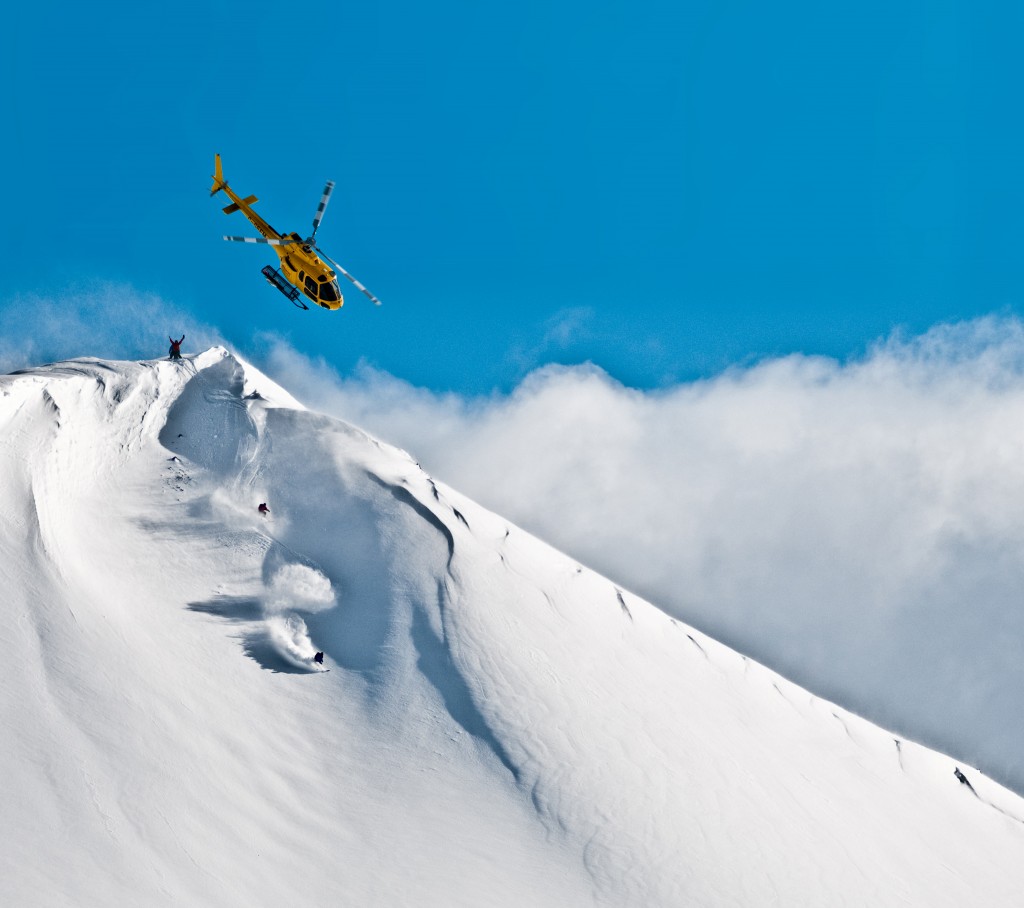
Photo – Dave Silver
I am lucky enough to ski for a living, and over the last few years, I have tried just about every shape and length imaginable in every type of snow and weather, and I’ve come to a couple of conclusions. If you’re looking for one ski to do everything, stay away from going too wide. Anything over 112mm is nonsense if that’s your only pair. For the skier with just one set, I’ve found the sweet spot to be somewhere between 100 and 108mm underfoot. Add in a little bit of rocker in the tip, and you have a great one-quiver ski. At those dimensions, it will excel in every type of terrain, from deep snow to hard pack.
Planning a heliskiing trip? Our guides recommend all-mountain skis in the 100-112mm range for most guests. These handle everything from deep powder skis terrain to variable snow conditions on tree runs.
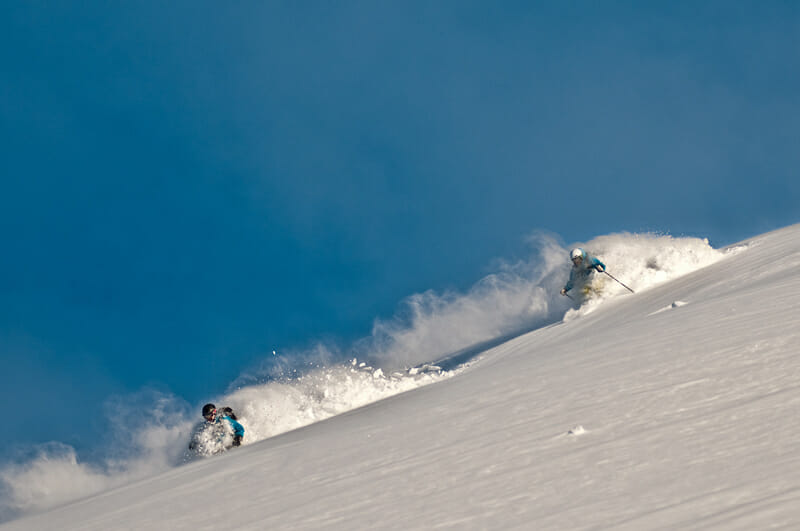
Photo – Dave Silver
Building Your Quiver: All-Mountain, Powder & Backcountry Skis
If you’re someone who wants a bit of quiver, then you have a few more choices. For myself, I have two different skis. I have an all-around, do-everything ski, and I have a ski for powder days. My all-around work ski has some rocker in the tip and is 95mm underfoot with a nice, wide shovel. It’s light and nimble and good in everything. I’m 5’11” and I ski on a 184cm length. This ski is fantastic on groomers, hardpack, moguls, crud, basically everything except ultra deep snow. But even in powder, it’s fine, just a little more work. For big, deep days, I have a bigger ski that is 188cm long and runs at 118mm underfoot. It’s stiff, has a moderate rocker throughout and is a big mountain shredder.
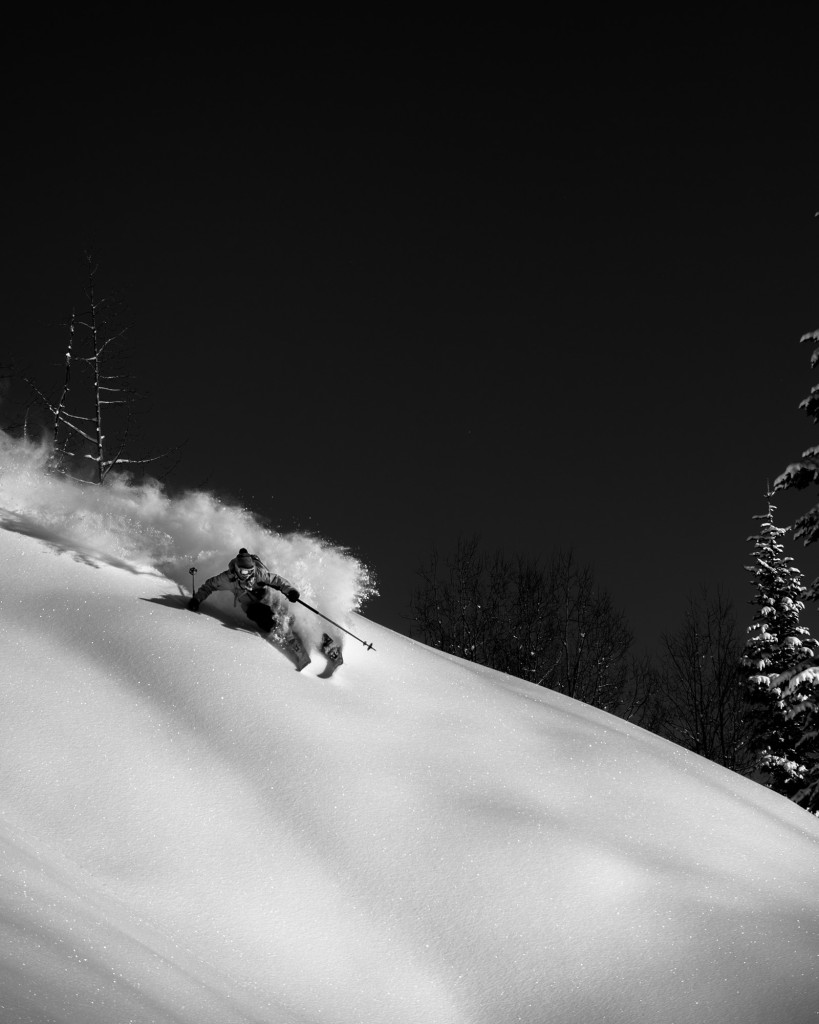
Photo – Reuben Krabbe
Notice how I haven’t gone too wide? If all you are doing is heliskiing at Last Frontier, then maybe you could stretch that to something fatter, but how many of us, save heliski guides, ski from a helicopter everyday? On the hill there are cat tracks, crud, ice and variable snow, even if it’s blower snow up high. For all that variable terrain, a ski that is over 120mm underfoot is just too wide for me and doesn’t offer much confidence on anything but the fluffiest, deepest pow. Not to mention the fact that at high speeds on anything but a groomer, super fat skis are incredibly unstable and difficult to put on edge.
Photo – Steve Rosset
How to Choose Skis: Demo Before You Buy
So what should you choose? Difficult question. But don’t despair. The best way to choose skis is to test different ski lengths, ski widths, and types on varied snow conditions. Every ski shop has demos—grab a pair of skis and see how they perform. If you’re coming to stay at one of our heliskiing lodges, our ski shop can help you dial in your setup before you hit the terrain. Whether you need all-mountain skis, powder skis, or backcountry skis, testing is key. Get out there and find your perfect pair. Be safe, ski hard.
About D'Arcy McLeish
Writer, copywriter, professional ski patroller, rope access technician, mountain rescue specialist, coffee addict, CBC listener. When not doing any of these things, you'll find D'Arcy either reading, climbing or riding his bike. He lives in Squamish, British Columbia.View all posts by D'Arcy McLeish